

Past Course
Native Science:
Natural Laws of Interdependence
with Dr. Gregory Cajete & Dr. Lyla June Johnston
Overview
In this exciting new course, renowned Tewa Pueblo scholar and author of Native Science, Dr. Gregory Cajete, taught how Indigenous sciences understand the natural world through experience and deep relationship–highlighting parallels and differences between the Indigenous science and Western science paradigms, with special emphasis on environmental and ecological studies. Joining him was Dr. Lyla June who studied with Dr. Cajete in her master’s and doctoral work, specializing in Indigenous teaching methods and Indigenous regenerative land management techniques.
Dr. Cajete led us through history, philosophy, cosmology–and how humans are inseparable from Nature. In our times of global environmental crises, Dr. Cajete helped us to see how sciences and worldviews of First Nation’s peoples can help us work toward timely solutions.
In this past course:
We explored where Indigenous sciences help us navigate ecological, social and economic crises
Compared Indigenous sciences and Western sciences
Heard from Dr. Cajete and Dr. Johnston on “Creating a Mindful Science”
Engaged in international solutions development and timely discussions
Joined a community of like-minded people in service to Mother Earth
Course Logistics
This course took place via Zoom on May 10 & 17
At the request of Dr. Cajete, in order to protect these teachings, each recording was available for one week after each session:
Module 1 recording was available until May 17th, 11:59pm Pacific Time
Module 2 recording was available until May 24th, 11:59pm Pacific Time
We look forward to offering similar courses in the future.
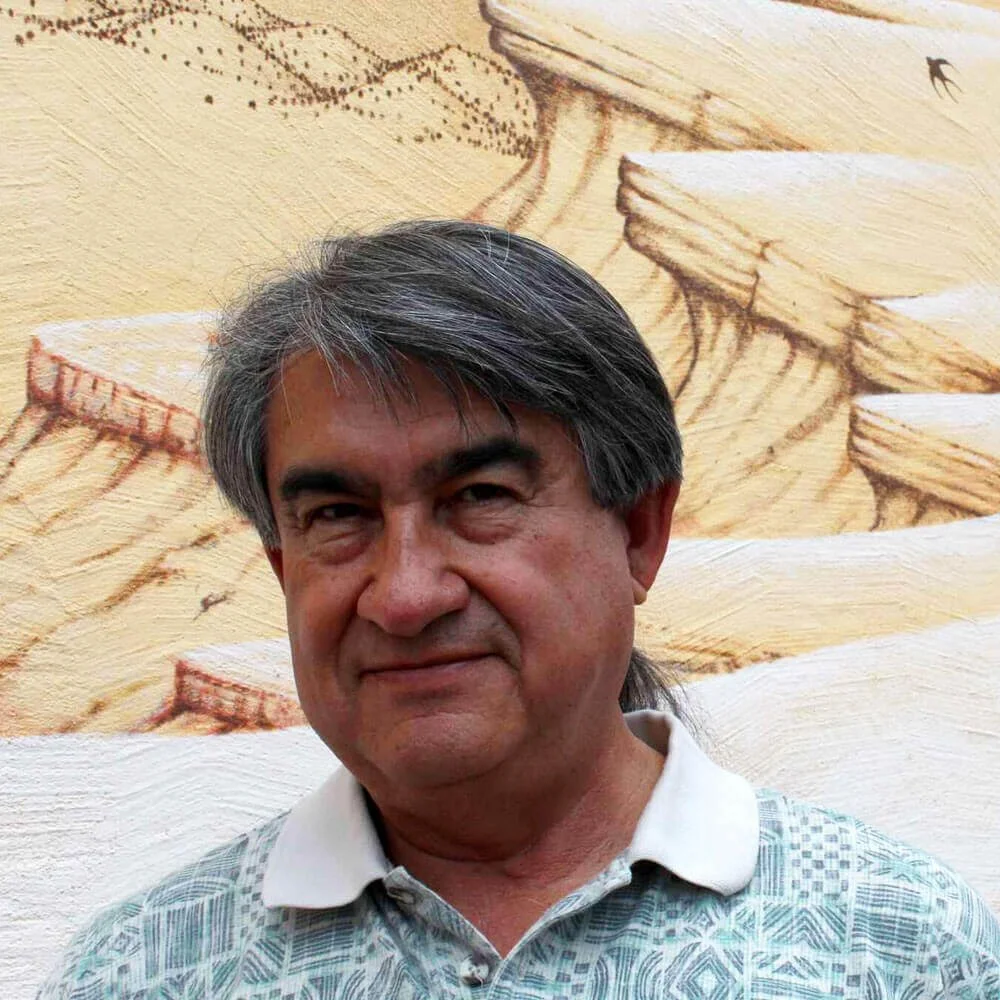
Dr. Gregory Cajete
is a renowned Indigenous educator whose work centers on weaving Native knowledge systems into contemporary education. A Tewa scholar from Santa Clara Pueblo, he has spent his career developing culturally grounded approaches to science, sustainability, and learning. His teaching and scholarship highlight Indigenous understandings of the natural world and promote educational models that honor community, creativity, and interdependence.
Dr. Cajete has taught at institutions across the United States and internationally, and spent over two decades at the Institute of American Indian Arts, where he directed cultural research programs and chaired Native American Studies. Since 1995, he has served as a professor at the University of New Mexico in Native American Studies and Language, Literacy, and Sociocultural Studies.
He holds degrees from New Mexico Highlands University and the University of New Mexico, and earned his PhD from International College’s New Philosophy Program. Among his many honors are fellowships from the U.S. Department of Education, the Newberry Library, and the School for Advanced Research. Dr. Cajete is the author of several influential books, including Look to the Mountain and Native Science, which continue to shape Indigenous education and ecological thinking worldwide.
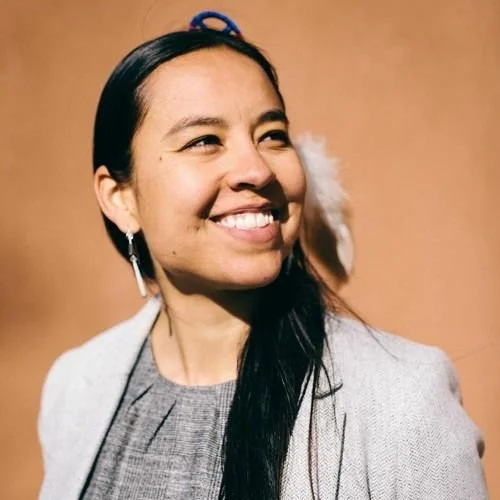
Dr. Lyla June Johnston
Lyla June Johnston (Diné/Tsétsêhéstâhese) specializes in Indigenous Regenerative Ecosystem Design. Through the survey and study of hundreds of case studies of successful Indigenous food systems, she has developed an understanding of some of the physical and moral attributes of these land management strategies.
She has traveled nationally and internationally lecturing on how humanity can learn and apply these lessons today. Dr. Johnston graduated from Stanford University with honors with a degree in environmental anthropology. She also holds a masters degree in Indigenous Teaching Methods from the University of New Mexico. Dr. Johnston also integrates the traditional teachings she grew up with to inform her perspectives and solutions. Her PhD research focused on the ways in which pre-colonial Indigenous Nations shaped large regions of Turtle Island (aka the Americas) to produce abundant food systems for humans and non-humans. She teaches alongside a beautiful network of guest speakers, elders, practitioners, and knowledge keepers.
Learning Journey
-
Dr. Cajete led a fascinating lecture on Native sciences from his research across Native knowledge systems and contemporary education. From his own exploration of Indigenous epistemologies–and his own journey starting in biological sciences, science teaching, and then to Native studies– Dr. Cajete shared about Native sciences as a method of resonating with the natural world. In order for everyone to find meaning and their own regenerative ways of being with the natural world, Dr. Cajete shared about circular thinking, Indigenous ethics, mutualism, the foundations of Indigenous knowledge systems, and more.
-
Dr. Cajete and Dr. Lyla June discussed how mindfulness can help us to move out of Western approaches and into Indigenous knowledge systems that benefit our intersectional relationships with each other and the Earth. We didn’t look at mindfulness in the Western understanding today, but in the Indigenous expressions of relationality, mutual reciprocal awareness and spiritual ecology. Together, they spoke to the ways humanity plays a practical role in the perpetuation of Earth’s natural processes, and the fulfillment that comes from those practices.